

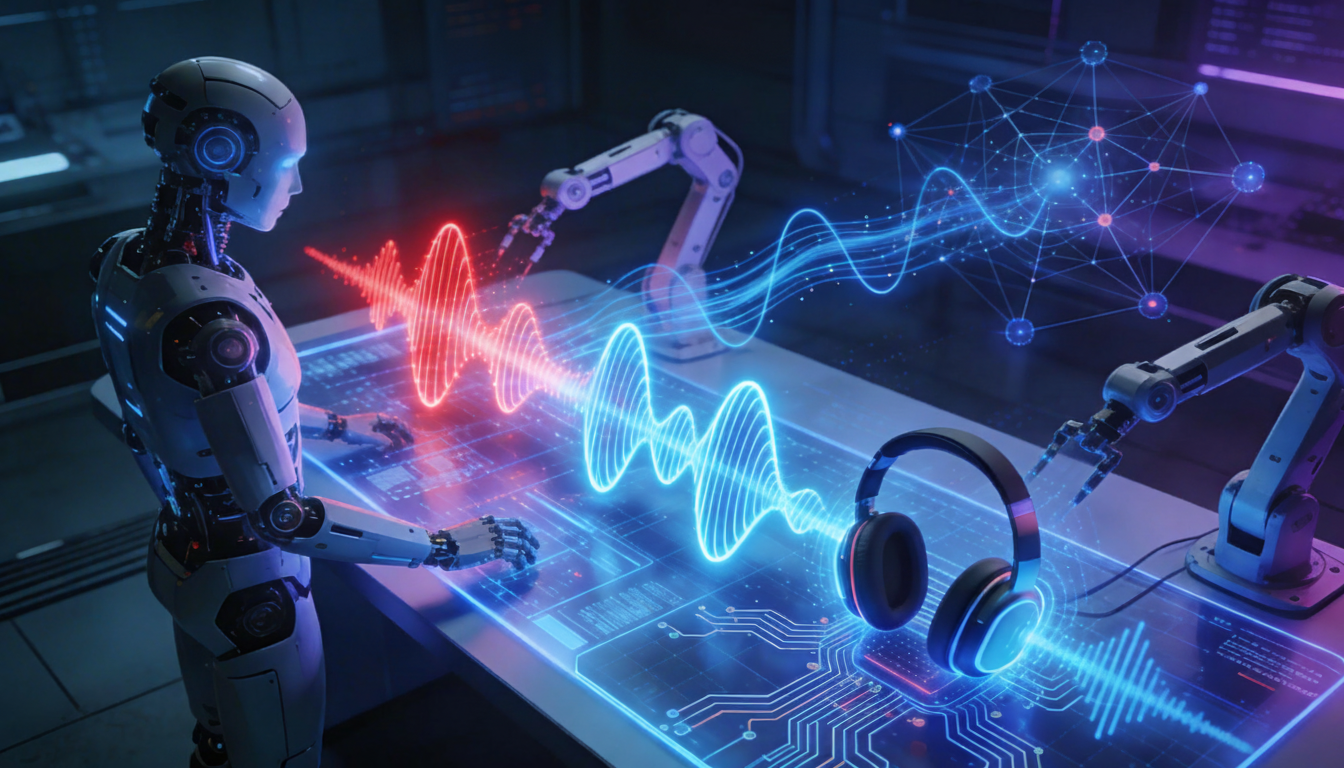
ANC is very important for us, and it’s advancing.
Active noise cancellation (ANC) technology has seen remarkable advancements in recent years, driven by AI integration, adaptive algorithms, and hardware innovations that deliver unprecedented noise suppression across diverse environments. The Privatone team realizes that this one technology alone may be one of the most important qualitative features offered in the first model; if this doesn’t work well, the rest of the product could fail. Therefore we’re diligently engaged with technology community and continue to monitor the evolution of ANC.
Hybrid ANC Dominance
Hybrid ANC combines feedforward (external mic) and feedback (internal mic) microphones to tackle both low-frequency rumble (like engines) and higher-frequency sounds (like voices), achieving up to 50dB of attenuation in top models. Recent 2026 earbuds like the Technics EAH-AZ100 showcase this with superb broadband performance, outperforming older pure feedforward systems. Multi-mic arrays (6+ mics) and improved DSP enable precise phase cancellation without the howling instability of early feedback designs.
Adaptive and AI-Powered ANC
The biggest leap is adaptive ANC, where on-device Neural Processing Units (NPUs) analyze environments 50,000 times per second, dynamically adjusting cancellation for variables like fit changes, head turns, or sudden noises. AI distinguishes noise types—sustained hums vs. transients like cries—and compensates for seal leaks by boosting low-frequency anti-noise in real time. This makes ANC “set-it-and-forget-it,” with modes auto-switching between transport, office, and ambient awareness.
Selective and Target Noise Suppression
AI breakthroughs allow selective ANC, where headsets learn and cancel specific sounds (e.g., sirens, chatter) while preserving others, using neural networks on companion devices or embedded chips. University of Washington prototypes demonstrate real-time filtering of 20+ environmental categories in under 1/100th second, ready for commercialization. For open-ear designs, 2026 trends blend ANC with transparency for safety without sacrificing immersion.
Efficiency and Battery Improvements
Modern ANC sips power thanks to efficient codecs, low-power Bluetooth (LE Audio), and optimized algorithms that run lighter models. Expect 20–30+ hours of ANC playtime in premium buds, up from 10–15 hours a few years ago, without sacrificing performance.
Near-Future Expectations (2026–2028)
Spatial ANC will expand beyond headphones to vehicles and rooms, using GPU-accelerated wavefront tracking at microsecond latency and 1/10,000th the power of current systems. Personalized ANC via apps will create user-specific profiles based on hearing tests and usage, integrating with spatial audio for 3D immersion. Health features like safe volume limits and exposure monitoring will pair with ANC, while advanced materials enable lighter, foldable designs. Open-ear ANC hybrids will proliferate for runners and cyclists, and seamless multi-device syncing will unify experiences across ecosystems.
Open Issues and Challenges
While hybrid/adaptive ANC excels below 2kHz, mid-to-high frequencies remain tricky without perfect seals, pushing R&D toward audio-integrated ANC that masks residuals with music. Battery drain in ultra-aggressive modes and comfort for long wear persist as barriers.